
For decades, the sprawling expanse of the former Hellenikon International Airport lay dormant, a concrete monument to bureaucratic paralysis. Today, the Elliniko mega-project is rapidly transforming the coastline, serving as the glittering crown jewel of Greece’s economic resurgence. As the highly anticipated “East Village” residential phase hits the market, one thing is abundantly clear: property prices in Elliniko are redefining what it means to buy real estate in Athens in 2026.
Why are property prices in Elliniko so high?
Current valuations are driven by a combination of master-planned urban security, a severe lack of comparable luxury green-stock in the broader capital, and aggressive absorption by high-net-worth domestic buyers and the returning Greek diaspora.
While these metrics spell success for developers, examining the real-world impact of the East Village requires looking past the glossy architectural renders and confronting the deep socio-economic friction it creates for the rest of the city.
The Economics of Exclusivity
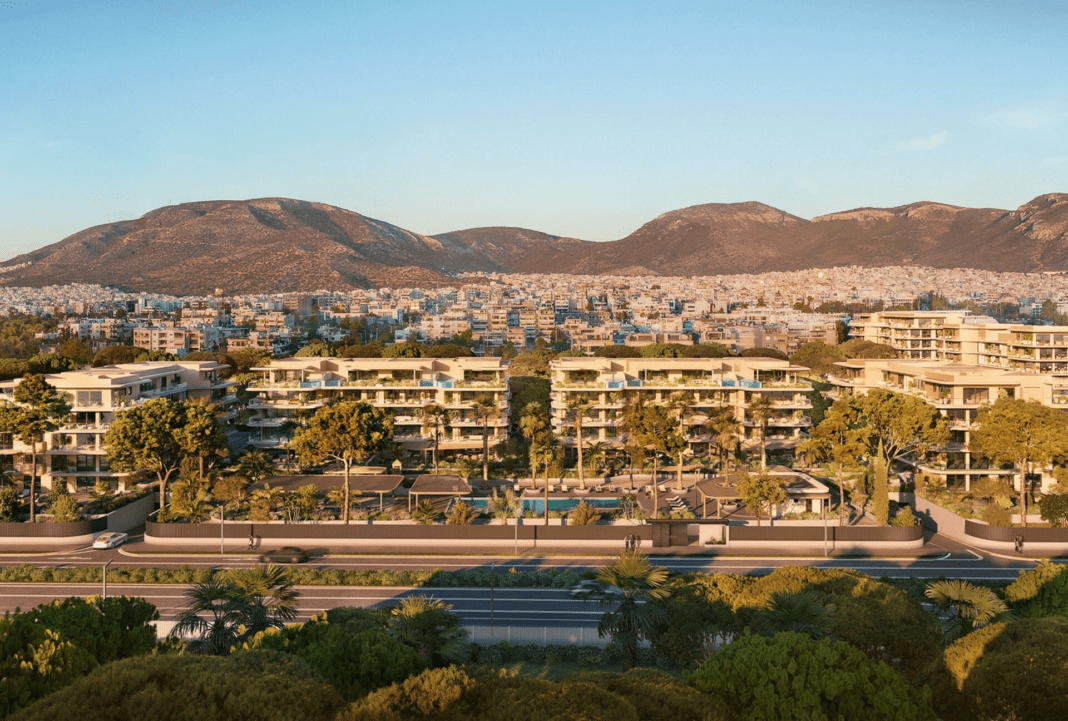
The East Village is deliberately positioned as a holistic, smart-city neighborhood emphasizing green spaces, walkability, and integrated community infrastructure. However, this manufactured utopia comes with a formidable barrier to entry.
Off-plan sales data indicates that the price per square meter in this enclave comfortably ranges between €6,500 and €9,000, aligning seamlessly with premium Western European benchmarks. The developers are not merely selling concrete; they are monetizing a heavily curated lifestyle in a city historically starved of urban green space.
However, this rapid development further widens the vast, growing chasm between the real estate market and the actual purchasing power of average Greek households. While the state celebrates the influx of capital, the East Village operates in an entirely different financial stratosphere, completely detached from the local wage economy that is already buckling under the broader [housing crisis in Greece 🔗].
Athens Riviera Real Estate: A Market Redefined
When analyzing massive luxury developments in Southern Europe, the default assumption is that the inventory will be swallowed entirely by foreign institutional funds. The East Village, however, reveals a highly specific shift in the market.
The predominant demographic purchasing within the Elliniko perimeter is surprisingly domestic. The buyer profile is anchored by Greek high-net-worth individuals and a massive influx of capital from the Greek diaspora (US, UK, and Australia). For these buyers, Elliniko is a premium repatriation vehicle. This high domestic absorption rate signals a restoration of confidence; the wealthiest Greeks are betting heavily on their own soil. Yet, this localized concentration of wealth inevitably triggers a tsunami of gentrification along the coast.
The Ripple Effect on Buyers and Renters
For international buyers looking to buy property in Athens, Greece, Elliniko is rapidly becoming the new pricing benchmark—effectively resetting expectations across the entire southern coastline.
The Elliniko project does not exist in isolation; it acts as a massive gravitational force. Property owners in adjacent municipalities like Glyfada, Alimos, and Argyroupoli are preemptively using Elliniko’s €8,000+ per square meter valuation to justify massive hikes in their own asking prices and monthly rents. For the average renter or middle-class prospective buyer, the mega-project is not an opportunity—it is a threatening benchmark. This “Elliniko Effect” forces local residents further inland, accelerating the displacement of the middle class from the Riviera.
A City of Two Speeds
The commercial success of the East Village proves that there is a deep, highly liquid market for master-planned luxury real estate in Greece. But it also comes with a profound social cost.
Elliniko is not just changing the image of Athens; it is permanently changing the boundaries of what is considered affordable. In this new economic reality, the city risks being firmly divided into two distinct speeds: those who possess the capital to invest in the future of the Riviera, and those who are simply trying to survive the cost of staying in it.