

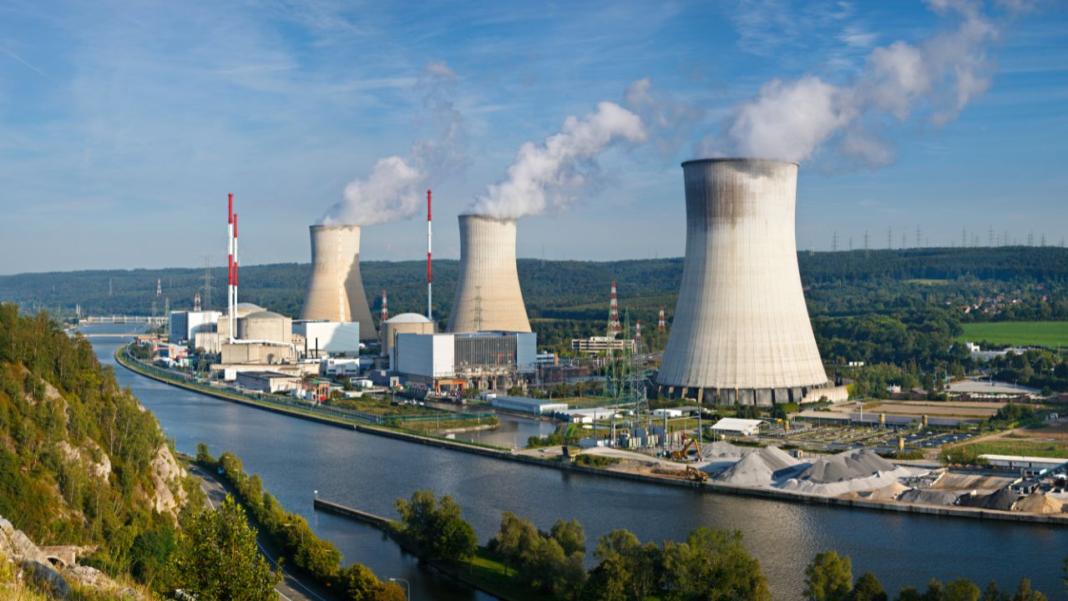
The Greek government is prepared to launch its first structured institutional framework to evaluate nuclear energy capabilities. Moving past preliminary discussions, the Ministry of Environment and Energy is establishing two parallel advisory and working groups tasked with mapping out regulatory baselines and identifying industrial opportunities within the rapidly growing Small Modular Reactor (SMR) market.
This policy pivot does not signal an immediate plan to construct a conventional mainland nuclear plant. Instead, the initiative focuses on positioning the domestic industrial footprint within the broader European zero-emission supply chain. By aligning metallurgical, maritime, and engineering sectors, the state aims to determine whether the domestic economy can manufacture specialized components for modern reactor networks before the global market solidifies over the next two decades.
Dual Task Forces to Map Regulatory and Industrial Baselines
The institutional framework will operate through two distinct bodies scheduled to finalize their operational scopes by the end of the summer:
- The Governmental Coordination Committee: A high-level political body responsible for mapping the institutional, regulatory, and technical prerequisites of a potential domestic nuclear framework. This mechanism will evaluate licensing protocols, safety standards, waste management, and compatibility with broader European Union energy compliance guidelines.
- The Ecosystem Collaboration Platform: A joint working group uniting energy conglomerates, heavy industrial firms, universities, shipyards, and technical consultants. This platform will catalog the exact sub-sectors of the Greek economy capable of integrating into the international SMR supply chain.
By separating geopolitical licensing from industrial capacity assessments, the government intends to clear an organized pathway for private capital. Domestic corporations, including major metallurgy groups, cement manufacturers, and shipyards, are monitoring these committees to locate high-specification manufacturing contracts, ranging from heavy steel fabrications to specialized marine engineering services.
The Maritime Pivot: Floating Nuclear Power Plants
The operational interest in modular applications is heavily reinforced by a PESTLE study published by the Deon Policy Institute. The report indicates that conventional, large-scale terrestrial nuclear stations remain incompatible with local realities due to extensive licensing timelines, massive capital requirements, and land-use restrictions. Instead, the analysis recommends prioritizing Floating Nuclear Power Plants (FNPPs) utilizing small modular reactors mounted on specially designed marine platforms or vessels.
This floating variant aligns closely with specific structural characteristics of the country, leveraging its extensive coastline, fragmented island geography, established maritime tradition, and localized port infrastructure. Beyond traditional grid electricity generation, floating SMRs are being evaluated internationally as dedicated power sources for energy-intensive industrial complexes, commercial port hubs, isolated data centers, hydrogen production facilities, and large-scale desalination plants. This multi-purpose utility addresses critical long-term challenges in the domestic infrastructure framework, specifically balancing volatile regional water and energy demands.
Balancing the Renewable Grid with Industrial Assets
The policy shift toward SMRs comes as high penetration rates of Renewable Energy Sources (RES) introduce baseline stability challenges across the national grid. Because solar and wind outputs fluctuate depending on localized weather patterns, grid operators require flexible, continuous baseload capacity to prevent transmission strain. SMRs are manufactured largely in controlled factory environments and offer lower power outputs than twentieth-century reactors, providing the operational flexibility needed to complement renewable energy generation rather than compete with it.
For domestic heavy industry, the primary objective remains the creation of a “Made in Greece” stamp within the regional energy supply chain. As Europe seeks to rebuild its internal manufacturing capacity for net-zero technologies, the deployment of these task forces shifts the local nuclear debate away from narrow discussions about electricity generation toward a broader strategy of industrial diversification and long-term energy security.