

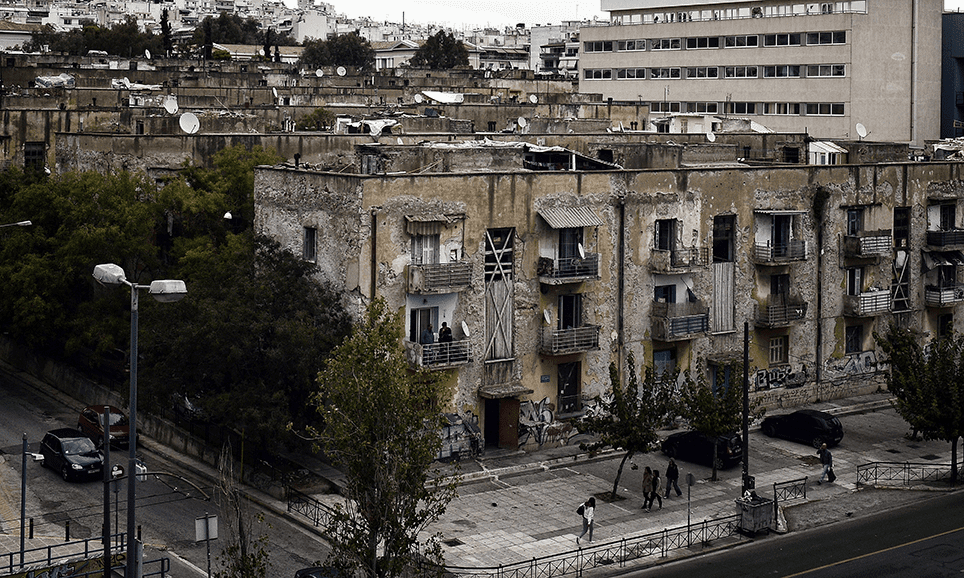
Navigating the Athenian housing market in 2026 often feels like fighting over scraps. Prospective renters face bidding wars, inflated prices, and an overwhelming sense of scarcity. Yet, looking up at the facades of mid-century polykatoikies across neighborhoods like Kypseli, Patissia, and even Peristeri, one notices a glaring contradiction: shuttered windows and dusty balconies.
In the midst of an acute housing squeeze, Athens is quietly harboring a vast number of vacant apartments—a phenomenon locally known as kleista spitia (closed homes). Official estimates have repeatedly pointed to a large stock of vacant homes in Athens, though the exact number varies by source and definition. Ultimately, the Greek capital is not suffering from a physical lack of concrete; it is suffering from a deep paralysis of utilization. Understanding why so many property owners choose to let real estate sit idle requires delving into the behavioral friction and legal complexities of Greek property ownership.
The Psychology and Legal Traps of the ‘Closed House’
To the outside observer, leaving an apartment empty in a high-demand market seems financially irrational. However, for many Greek families, the decision is often defensive, rooted in historical legal structures and a deep-seated fear of the eviction process.
Inheritance Friction and Co-Ownership
A primary driver of the kleista spitia phenomenon is the complex nature of Greek inheritance. Properties are frequently passed down across generations not to a single heir, but divided among multiple siblings or cousins in fractional ownership.
When an apartment is co-owned by three individuals—perhaps one living abroad, one lacking the capital to renovate, and another emotionally attached to the family home—reaching a consensus to lease or sell becomes a bureaucratic nightmare. It is often easier, and less confrontational, to simply lock the door and pay the minimal baseline property tax (ENFIA) than to navigate familial disputes over rental income and maintenance.
The Fear of Defaulting Tenants
Beyond fractional ownership, there is a pervasive psychological barrier among single owners: the fear of a bad tenant. The Greek eviction process (exosi) is notoriously slow, costly, and heavily weighted toward protecting the tenant from immediate displacement. Many older property owners, having previously dealt with unpaid rent, destroyed interiors, and years-long legal battles, have calculated that the potential yield of a standard three-year civil lease carries too much emotional and financial risk. They choose the certainty of a zero return over the anxiety of a defaulting tenant.
State Interventions: The Push for Liquidity
Recognizing that building massive new housing developments is nearly impossible within the dense urban core, the Greek government has shifted its focus to mobilizing these dormant assets to ease the rental squeeze.
Tax Incentives and Policy Shifts
According to recent government measures, the state has introduced targeted fiscal interventions designed to coax hesitant landlords back into the long-term market. Under the current policy framework, a central incentive is a multi-year income tax holiday. Landlords who agree to open a property that has been officially registered as vacant—or those transitioning properties from short-term platforms—and place it on the long-term residential market may qualify for a significant exemption on their rental income tax. Given the progressive nature of Greek rental taxation, this mechanism attempts to make the financial reward outweigh the perceived risks of leasing.
The Reality of Renovation Capital
Despite the allure of tax relief, a severe structural barrier remains: the physical degradation of the housing stock. The vast majority of kleista spitia have been sealed for a decade or more.
The Cost of Modernization
Before an apartment can be competitively leased to a modern tenant, it usually requires a complete overhaul. Upgrading a 1970s apartment to meet 2026 living standards—installing new plumbing, autonomous heating systems to replace defunct central boilers, and energy-efficient aluminum frames to lower communal kinoxrista fees—requires heavy upfront capital. With labor shortages in the construction sector and the inflated cost of raw materials, securing this capital remains a massive bottleneck for the average Athenian landlord, often neutralizing the appeal of state tax incentives.
What This Means for Renters and Owners in 2026
The kleista spitia dilemma is the invisible anchor holding rental prices artificially high across the capital. As the city struggles with affordability, the fate of these empty apartments will dictate the trajectory of the market.
For renters, the key issue is whether these homes can return to the long-term market fast enough to ease the extreme pressure on prices. A sudden influx of newly available, modernized apartments could finally stabilize rents in highly contested neighborhoods. For owners, however, the challenge extends far beyond state tax incentives. Unlocking this hidden supply requires navigating steep renovation costs, achieving legal clarity among co-owners, and most importantly, re-establishing a baseline of trust in the security of long-term civil leases.